Origins and Royal Connections
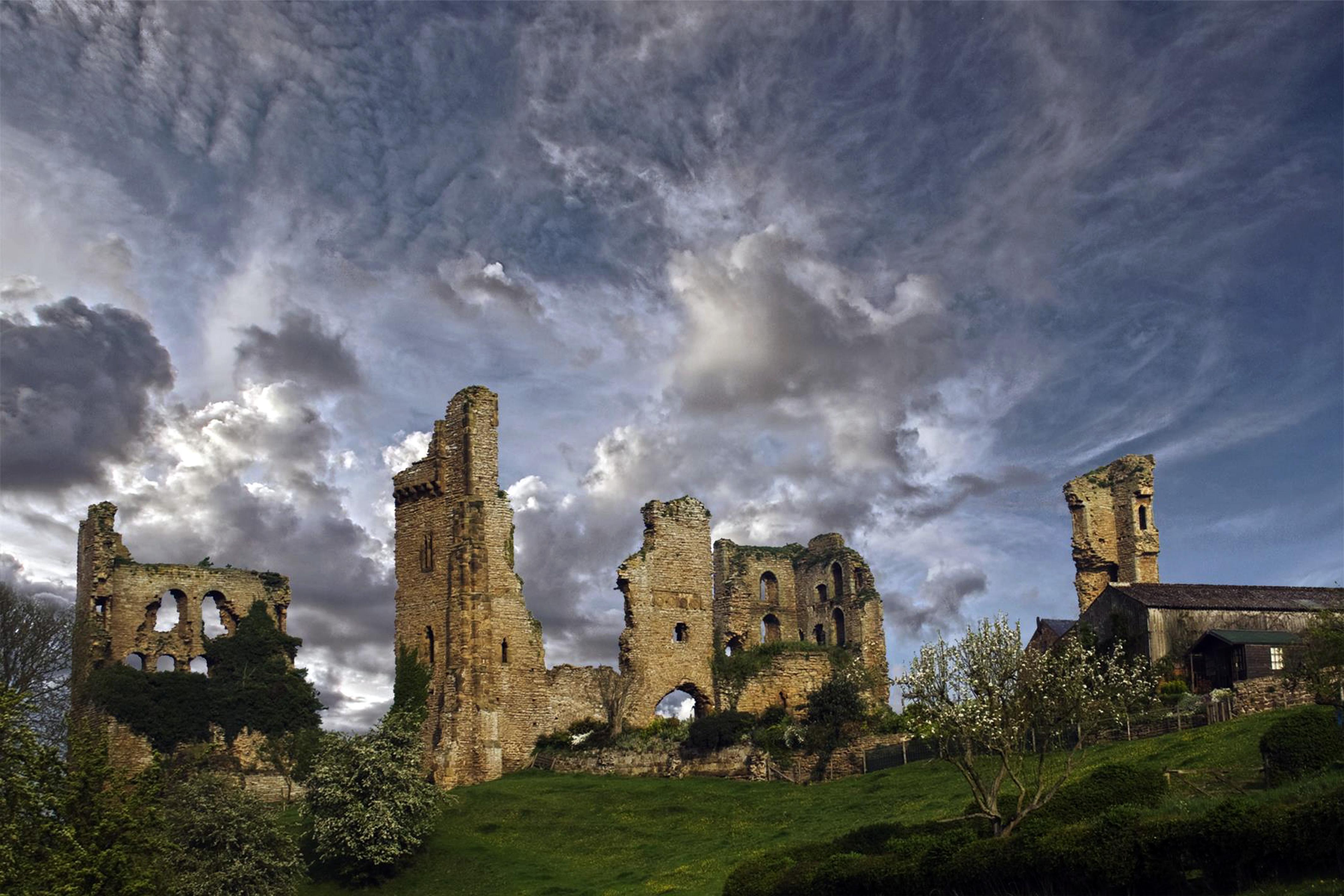
Built during the tumultuous times of King Stephen's reign by Bertram de Bulmer, Sheriff Hutton Castle was destined to become a stronghold with a storied past deeply intertwined with England's royal heritage. Acquired on 29 June 1471, it marked a significant addition to the holdings of one of the nation's most influential families—the Nevilles.
The Neville Dynastic Gateway
The castle's splendor amplified under the aegis of the Neville family. In 1377, John Neville procured the rights to host a market and a notably timed fair, elevating the castle's status as a center of local commerce. The estate's fortified presence was cemented in 1382 with a license to crenellate, transforming it into a bastion of defense and authority.
A Nevillian Partition and a Warwick Inheritance
Upon the death of the first Earl of Westmoreland, Ralph Neville, in 1423, the estate was divided, with the Yorkshire properties falling to Richard Neville—later known as the famed 'Kingmaker', of Warwick.
Richard III's Northern Command
The demise of Richard Neville at the Battle of Barnet transferred the stronghold to Richard, Duke of Gloucester. The castle then played a pivotal role as a strategic Northern command post, further solidified by Richard III's establishment of the Council of the North in 1484, with Sheriff Hutton as one of its main headquarters.
The Council of the North and Tudor Transition
As the machinations of power turned, the castle saw itself at the heart of defensive preparations against Scotland, and later as a sanctuary to royal blood – Elizabeth of York, before transitioning into Tudor hands. The influential Council which oversaw the governance and justice in the North operated from this site for over a century.
Henry VII's Legacy and Beyond
Following the battle of Bosworth, Sheriff Hutton found itself in royal hands once more, its ownership stabilizing under King Henry VII. Even as the monarchical landscape transformed, the castle remained tethered to the crown, eventually becoming part of the Prince of Wales's estate in the early 17th century.
Today's Echoes of the Past
In modern times, Sheriff Hutton remains enveloped in a quiet grandeur, privately owned yet forever imprinted on the tapestry of England's history. Its walls may not host kings and councils anymore, but they stand resilient—a testament to a bygone era of fervor, political intrigue, and the ceaseless march of power across the English North.