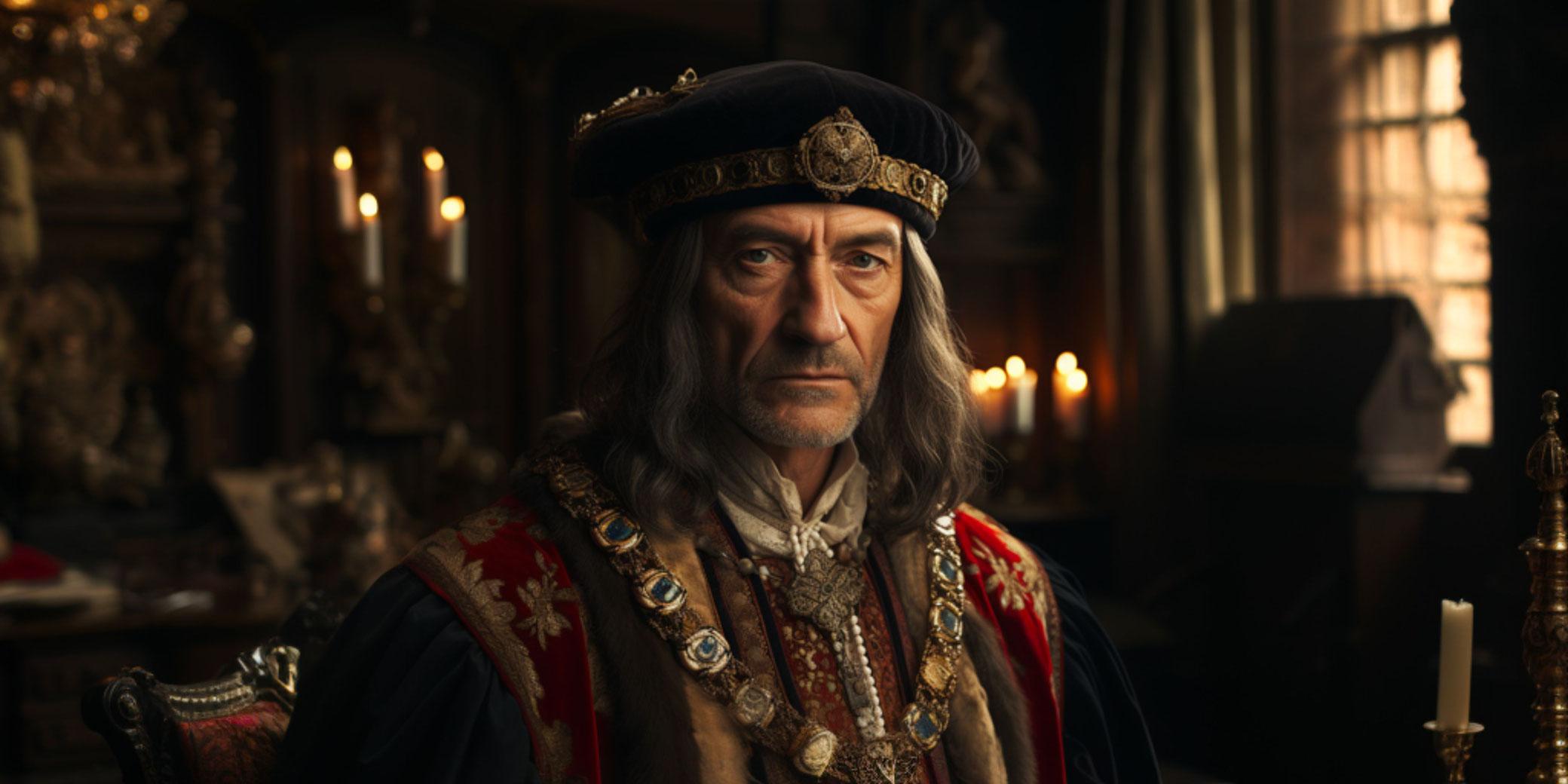
The late 15th century was marked by intrigue and the consolidation of power, exemplified by none other than Henry VII of England. The establishment of the Star Chamber, an English court of law, became a symbol of the Tudor dynasty's quest for control. This secretive court was tasked with dealing with matters too sensitive for the ordinary judicial system, often placing the most illustrious of society on trial in hushed proceedings that have since become infamous for their lack of transparency.
Redefining Royalty: Henry VII’s Controversial Court
Henry VII, ascending to the throne after the tumult of the Wars of the Roses, found himself in a precarious position. Stability meant the ruthless reining in of the English nobility, a task the Star Chamber was well suited for. Accusations of corruption and tyranny have since marred the legacy of this period, with historians debating the necessity versus the despotism of Henry's reign.
The Shadow of the White Rose: The Last Plantagenet
Meanwhile, the last Plantagenet king, Richard III, lingered as a shadow over Henry's tenure. The Richard III Society paints a starkly different picture of the man vilified by Tudor propaganda, suggesting that history has been unkind to the king who lost his life at Bosworth Field. Their rendition of events spotlights a ruler dedicated to the well-being of his country, rather than the Machiavellian figure of later accounts.
Henry VII and Richard III: The Twisted Fates of Two Kings

The contrast between Henry VII and Richard III provides a compelling narrative of power and legacy. As the Tudor dynasty sought to establish its legitimacy, it systematically undermined the reputation of Richard III, thus relegating his reign to the ignominious pages of history and overshadowing his reforms and leadership.
Spain and Portugal: Navigating Uncharted Waters
The 15th and 16th centuries were not solely about political intrigue in England. A larger narrative was unfolding on the Iberian Peninsula, where Spain and Portugal embarked on epic voyages that would redefine the world map. The Age of Discovery, as it is now known, would introduce unprecedented global exchanges of goods, cultures, and ideas.
Spain and Portugal: Harbingers of the Age of Exploration
Seafaring nations by necessity, Spain and Portugal became the vanguards of an age that witnessed humanity reach beyond the known horizon. Their ships, captained by intrepid explorers like Columbus, Vasco da Gama, and Magellan, were setting sail into the great unknown. It was a time of conquest and curiosity, driven by a thirst for wealth, expansion, and the pursuit of knowledge.
Portugal's Maritime Prowess

Portugal, under the vision of Prince Henry the Navigator, began this journey with its expeditions down the coast of Africa. Navigators pushed further south, shattering the mythological boundaries of the ancient world and establishing new trade routes that would ultimately lead to the discovery of a sea route to India.
Spain's Conquistadors and the New World
Spain, not to be outdone, launched its own voyages westward, culminating in the accidental discovery of the Americas by Christopher Columbus. What followed was an unprecedented era of colonization and the spread of Spanish influence across the Atlantic Ocean, forever transforming the geopolitical landscape.
The Legacy of Imperial Ambition
The voyages of Spain and Portugal set the stage for the centuries to follow. They brought to light new cultures, commodities, and ethical dilemmas as interactions between different worlds intensified. The legacy of this age of exploration and discovery remains deeply interwoven into the fabric of modern global relations, economics, and societal structures.
In conclusion, the trials of the Star Chamber and the narratives surrounding Henry VII and Richard III offer a glimpse into the complex power dynamics of the Tudor period. Simultaneously, the expansionary endeavors of Spain and Portugal illustrate the dawn of a new era in human history. Together, these threads weave a tapestry of innovation, ambition, and the unrelenting spirit of discovery that underscore the very essence of the 15th and 16th centuries.